IRELAND · 1916 PROCLAMATION
Series: Spoken State · 1 of 24
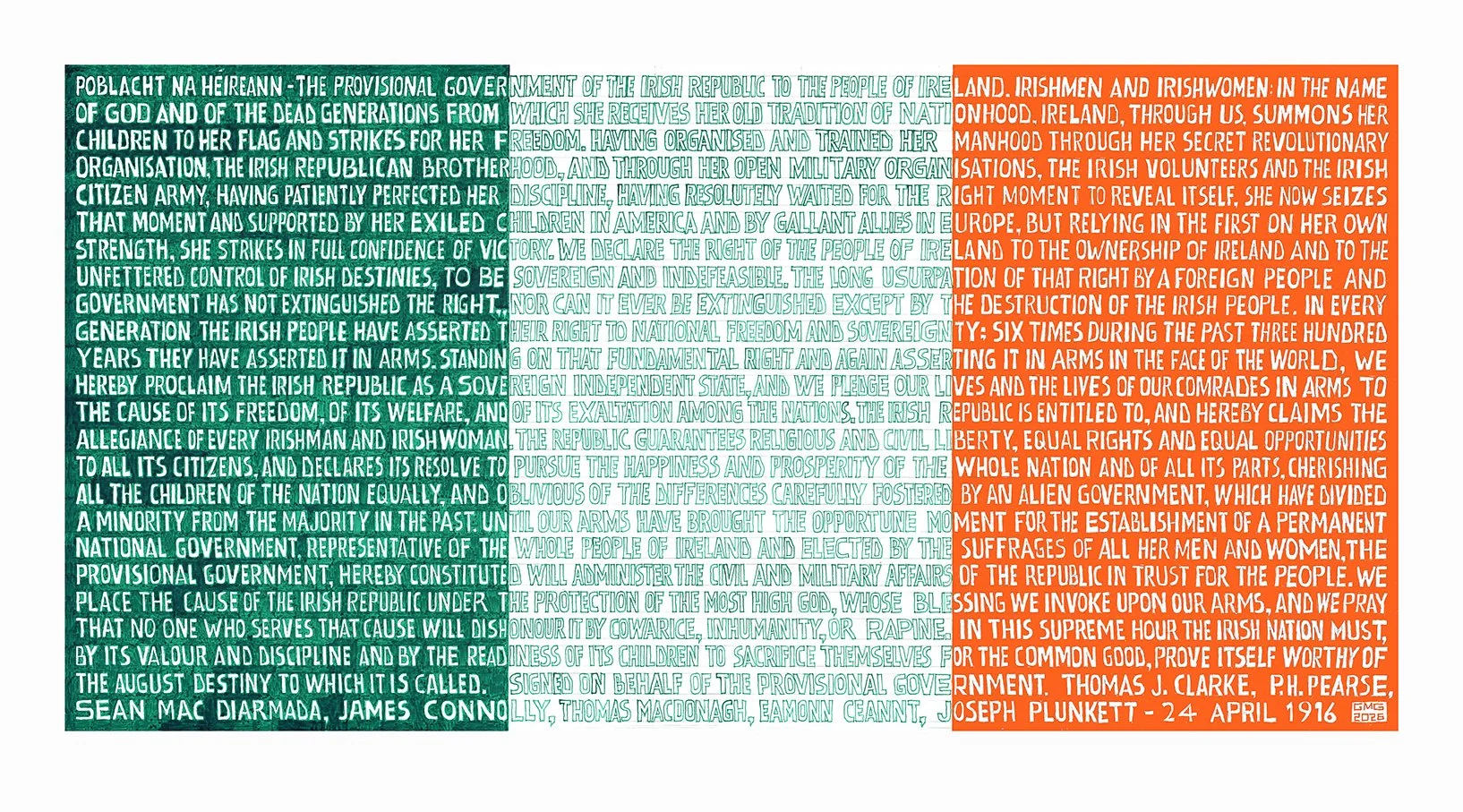
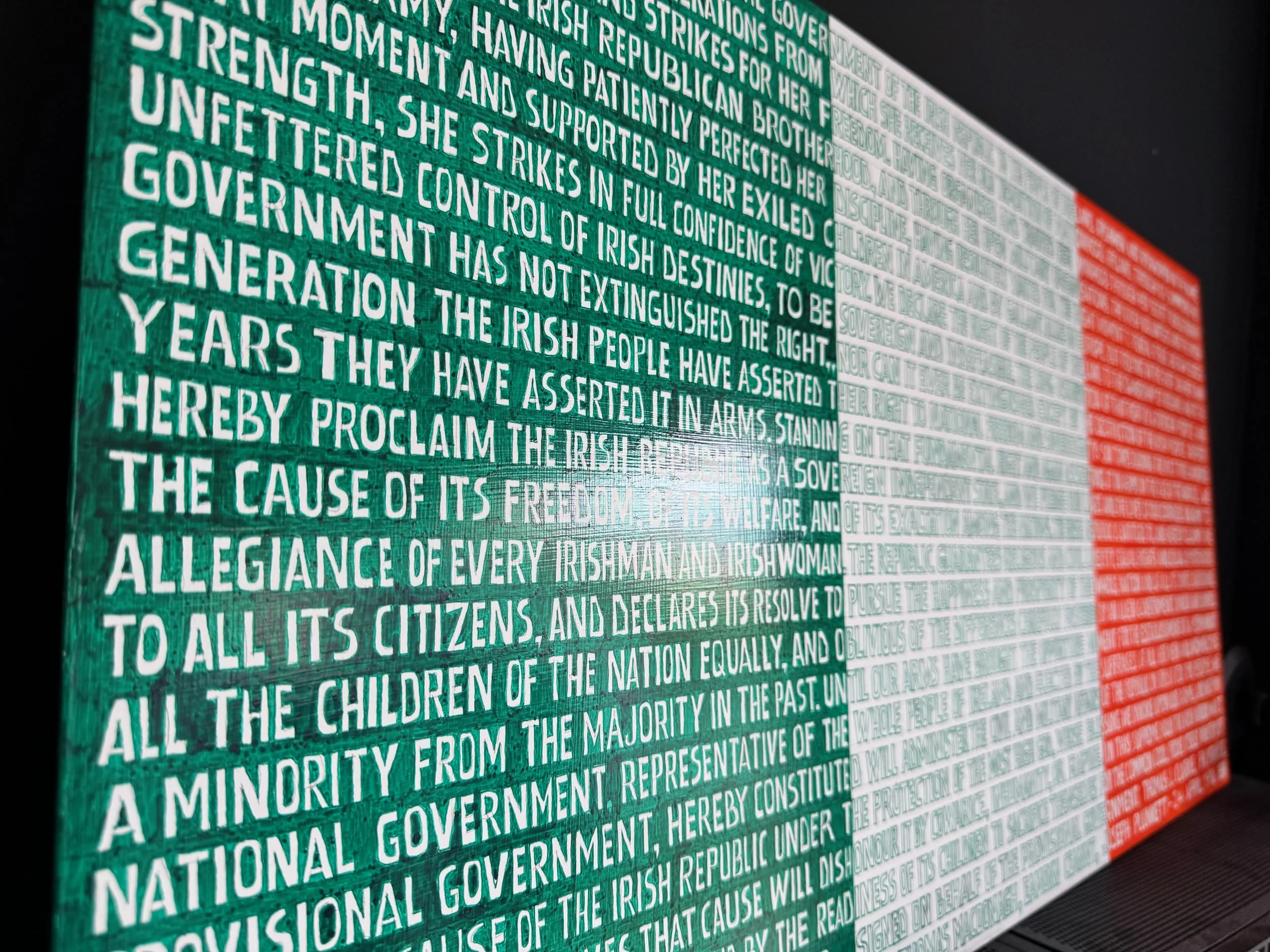
The Work
Medium: Acrylic and graphite pencil on industrial Dibond aluminum panel
Dimensions: 915 mm × 457 mm (1:2 Ratio Original Panel)
Historical Source: Proclamation of the Republic (Pádraig Pearse et al., 24 April 1916, General Post Office, Dublin)
Collection: Studio Archive (Part of the 24-piece global series)
MATERIAL & OPTICAL MECHANICS
Language does not merely describe nations; it constitutes them.
Ireland · 1916 Proclamation operates via a dual-mode visual paradigm:
Macro View (Distance): A hard-edge chromatic field rendering the definitive Irish Tricolour.
Micro View (Close Engagement): The visual field resolves into a dense, handwritten verbatim transcript of the 1916 Proclamation of the Irish Republic, executed in graphite and fluid acrylic directly onto the gessoed aluminium surface.
By embedding the foundational text of Irish statehood into the physical structure of the flag, the work examines how revolutionary speech is codified, abstracted, and institutionalised into national iconography.
ACQUISITION ARCHIVE & EDITIONS
Print editions directly finance the fabrication, studio materials, and archival research of the complete 24-country Spoken State suite.
1. Studio Edition
Dimensions: 500 mm × 1000 mm (2:1 Ratio)
Medium: Archival Pigment Print on 310gsm Fine Art Cotton Rag
Edition: Limited Edition of 96 (Signed & Numbered)
Investment: €350
Fulfillment: Insured Global Shipping in Cardboard Tube
[ BUTTON: Acquire Studio Edition — €350 ]
2. Large Collector Edition
Dimensions: 915 mm × 1830 mm (1:1 Original Scale)
Medium: Archival Pigment Print on 310gsm Fine Art Cotton Rag, Flush-Mounted to Aluminum Dibond
Edition: Limited Edition of 24 (Signed & Numbered)
Investment: €950
Fulfillment: Insured Global Shipping in Cardboard Tube
[ BUTTON: Inquire for Large Collector Edition — €750 ]
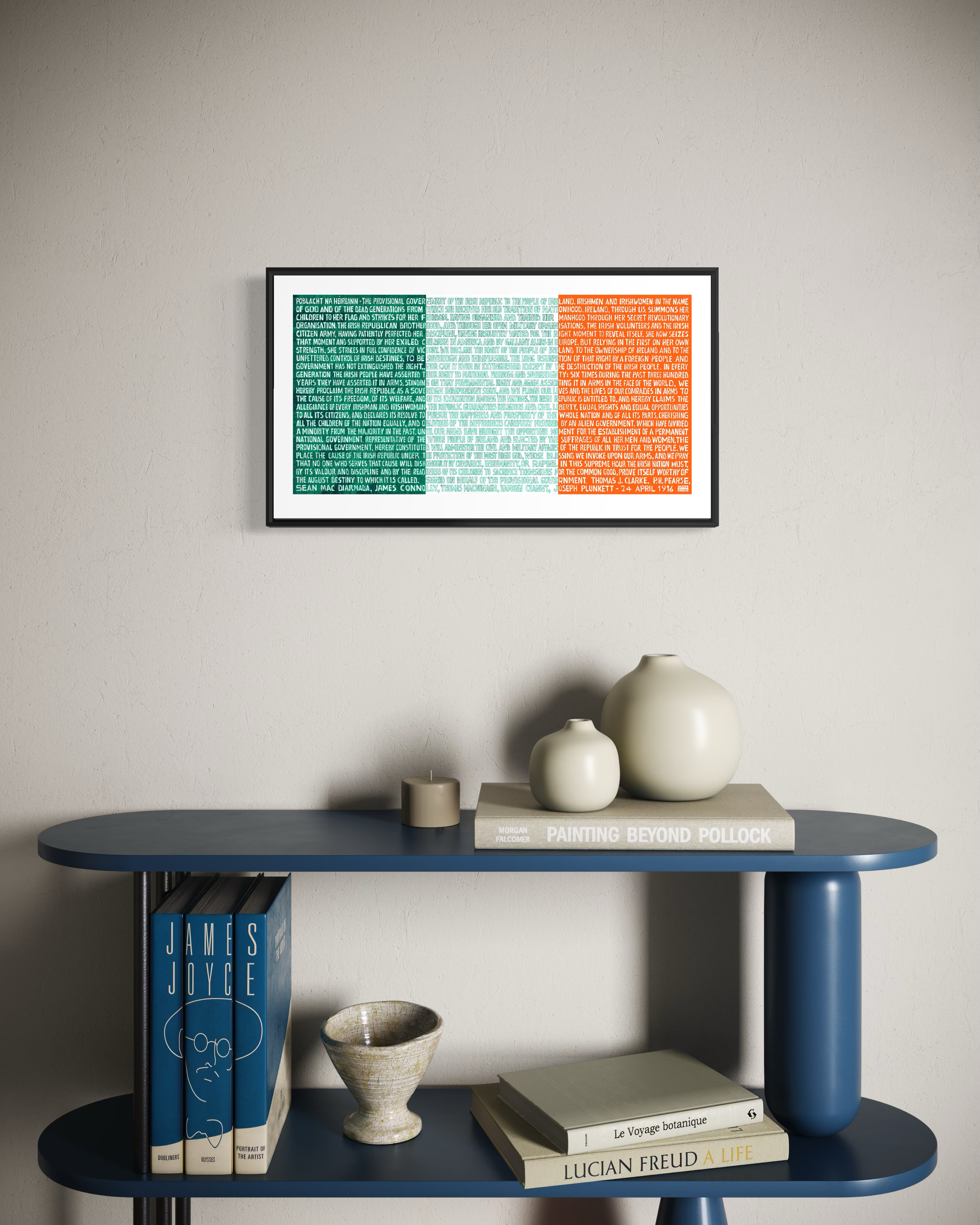
Archival pigment print
Edition of 96
Signed & numbered
Size: 57 cm × 32 cm
Unframed
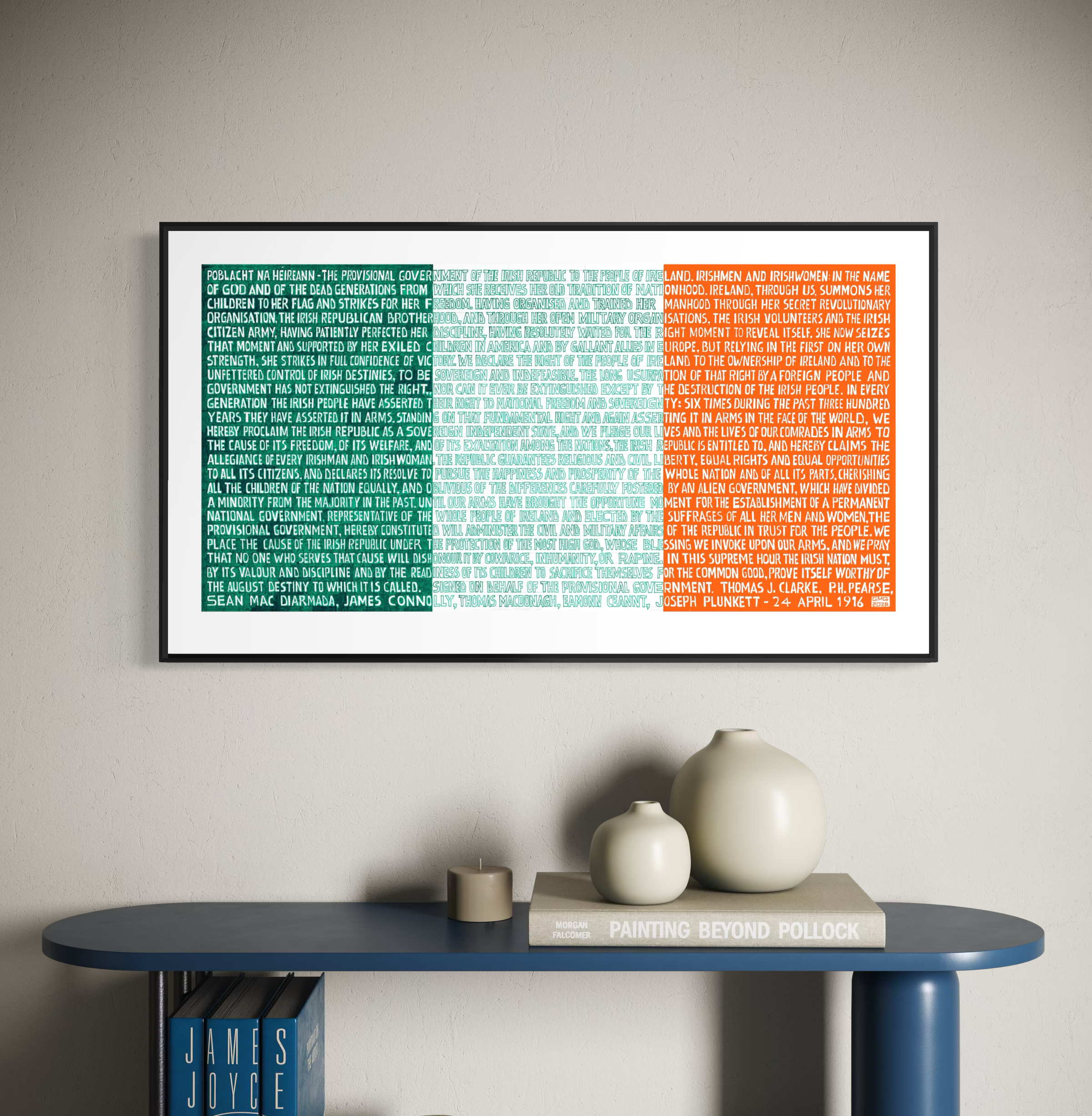
Archival pigment print
Edition of 24
Signed & numbered
Size: 91 × 50 cm
Unframed
Editions & Archival Prints
To accompany the original panel, a limited edition of museum-grade archival pigment prints has been produced, scanned via Cruse high-resolution technology, signed and numbered by the artist
Archival pigment print
Edition of 24
Signed & numbered
Size: 91 × 50 cm
Unframed
Archival pigment print
Edition of 96
Signed & numbered
Size: 57 cm × 32 cm
Unframed