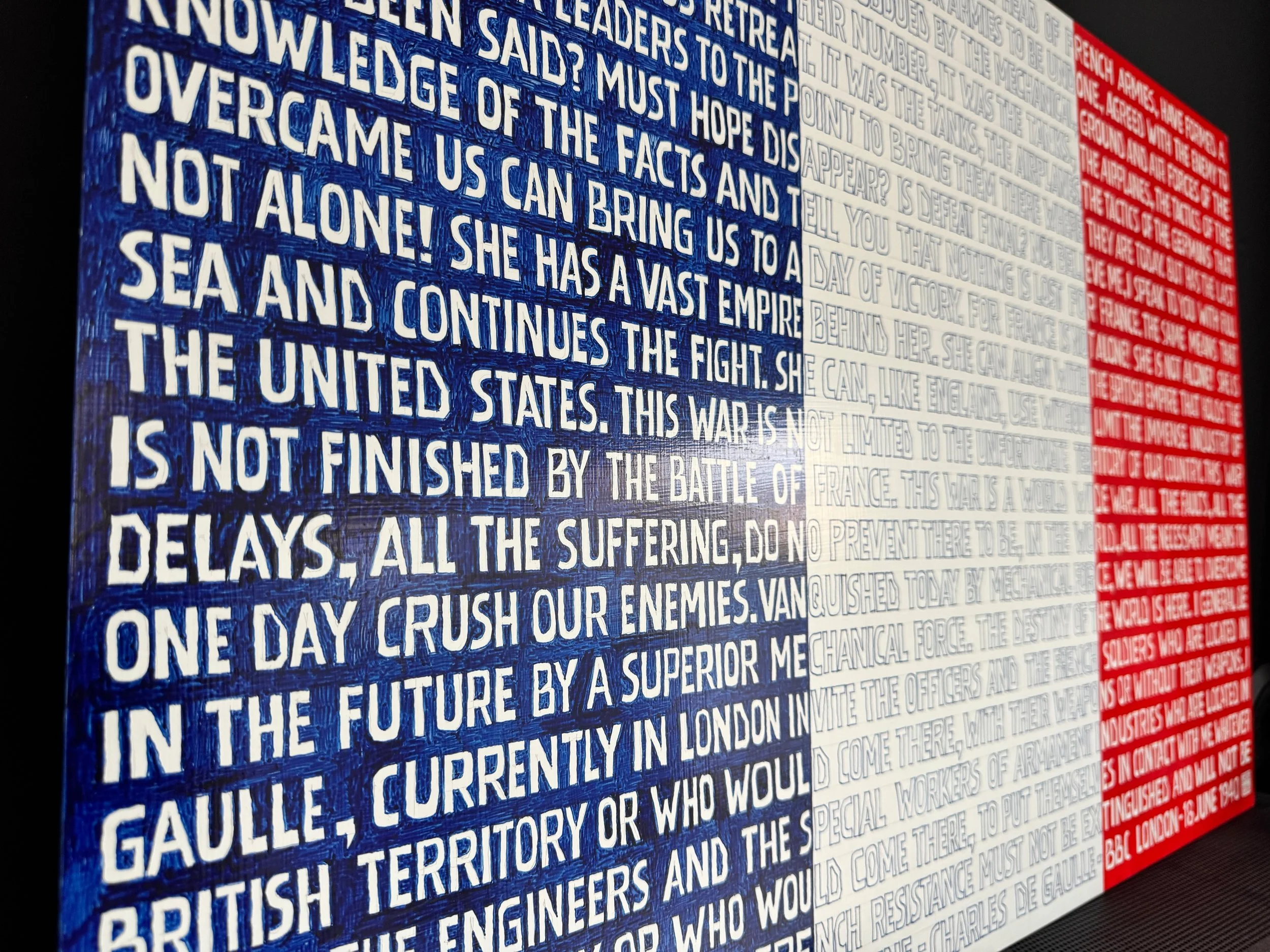
SPOKEN STATE FRANCE — CHARLES DE GAULLE
L’Appel du 18 Juin / London, 18 June 1940

ABOUT THE PAINTING
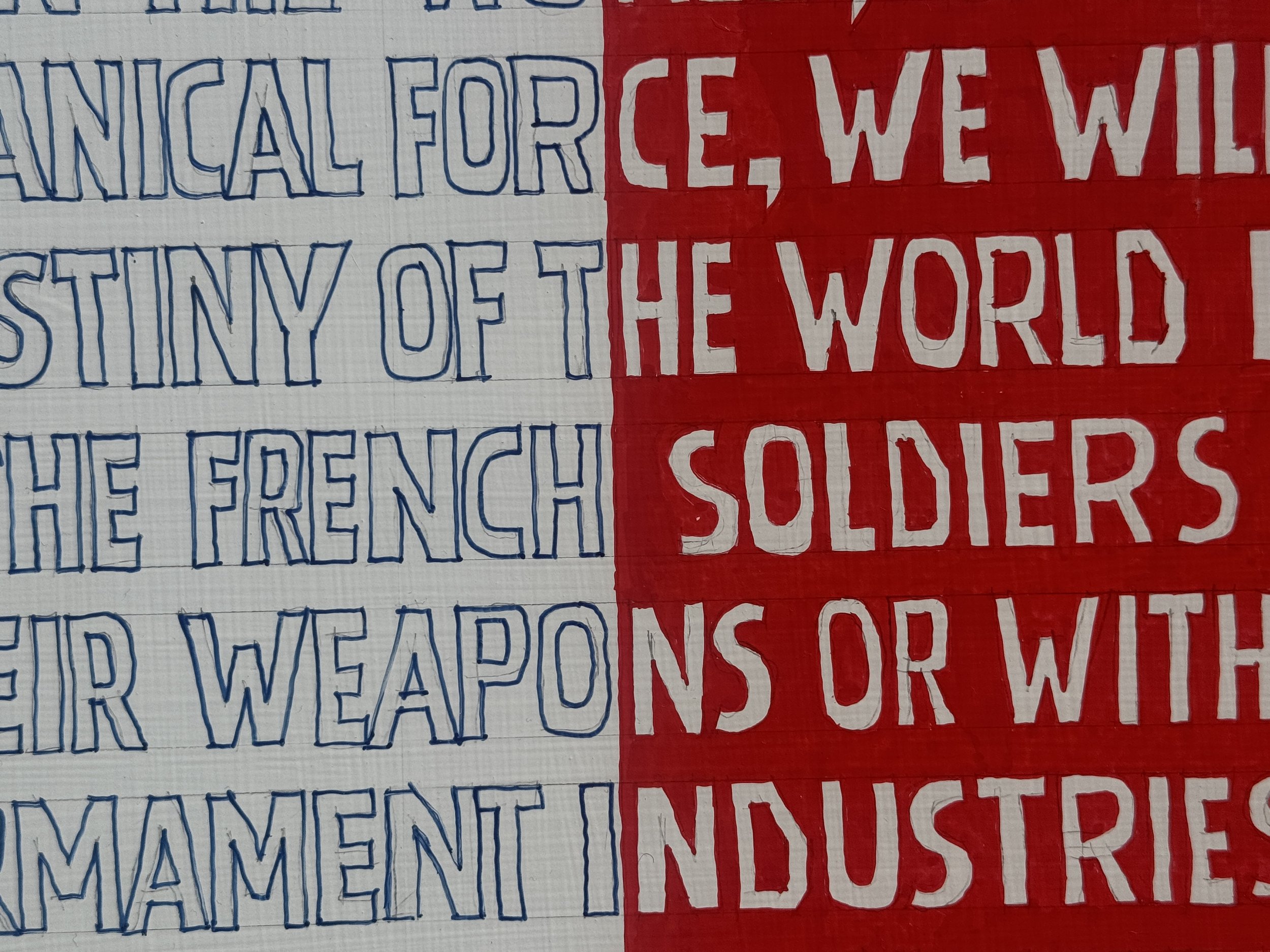
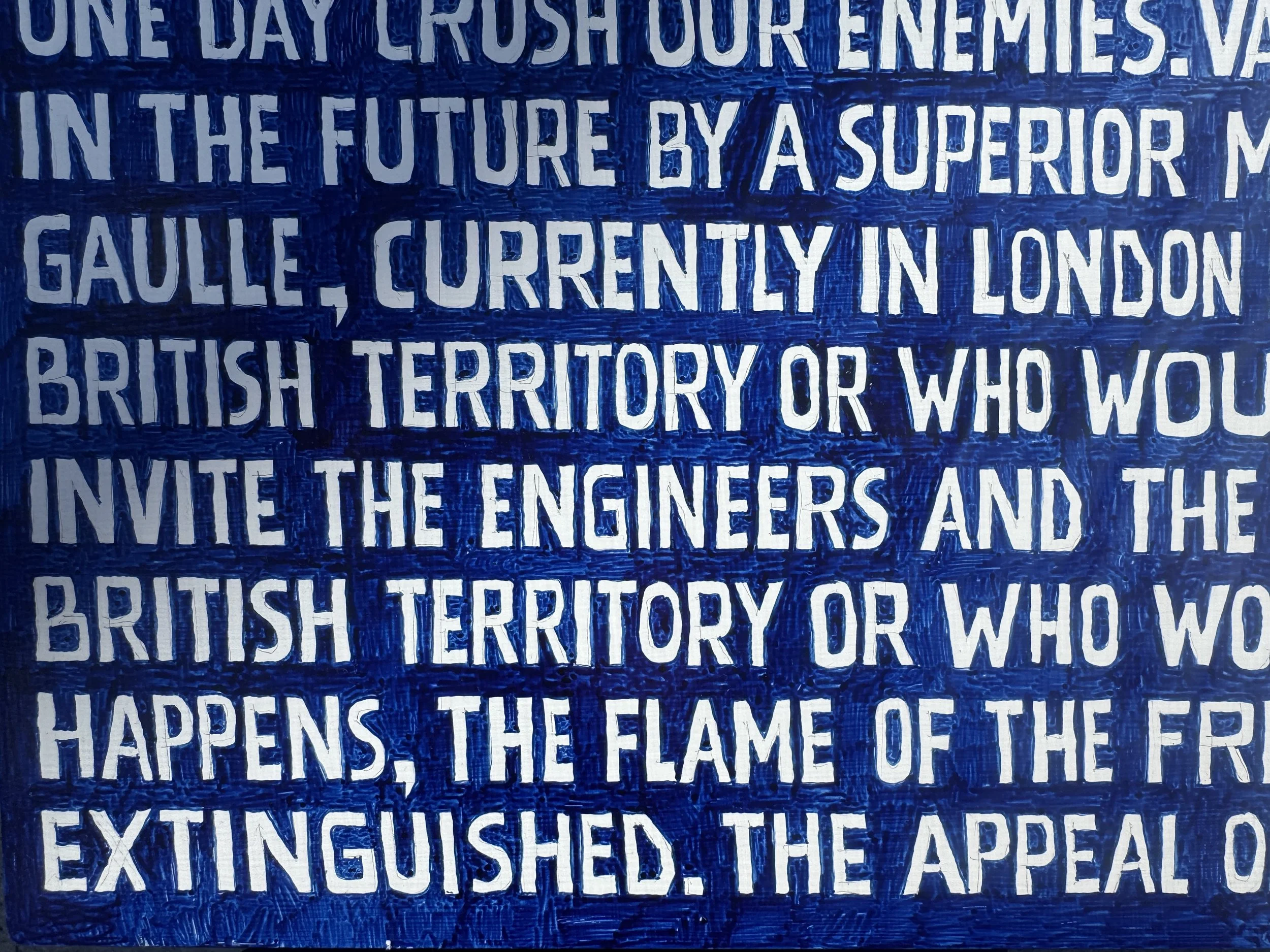
Words from Charles de Gaulle’s L’Appel du 18 Juin are drawn and painted by hand to form the French tricolour. From a distance, the blue, white and red read as a national flag. Up close, the lettering reveals a call to continue the struggle—placing resistance and the idea of France within the same image.
Print EDITIONS
Signed and numbered archival pigment prints of the original paintings, produced in limited editions and available in two sizes. Each print is supplied unframed.
Process
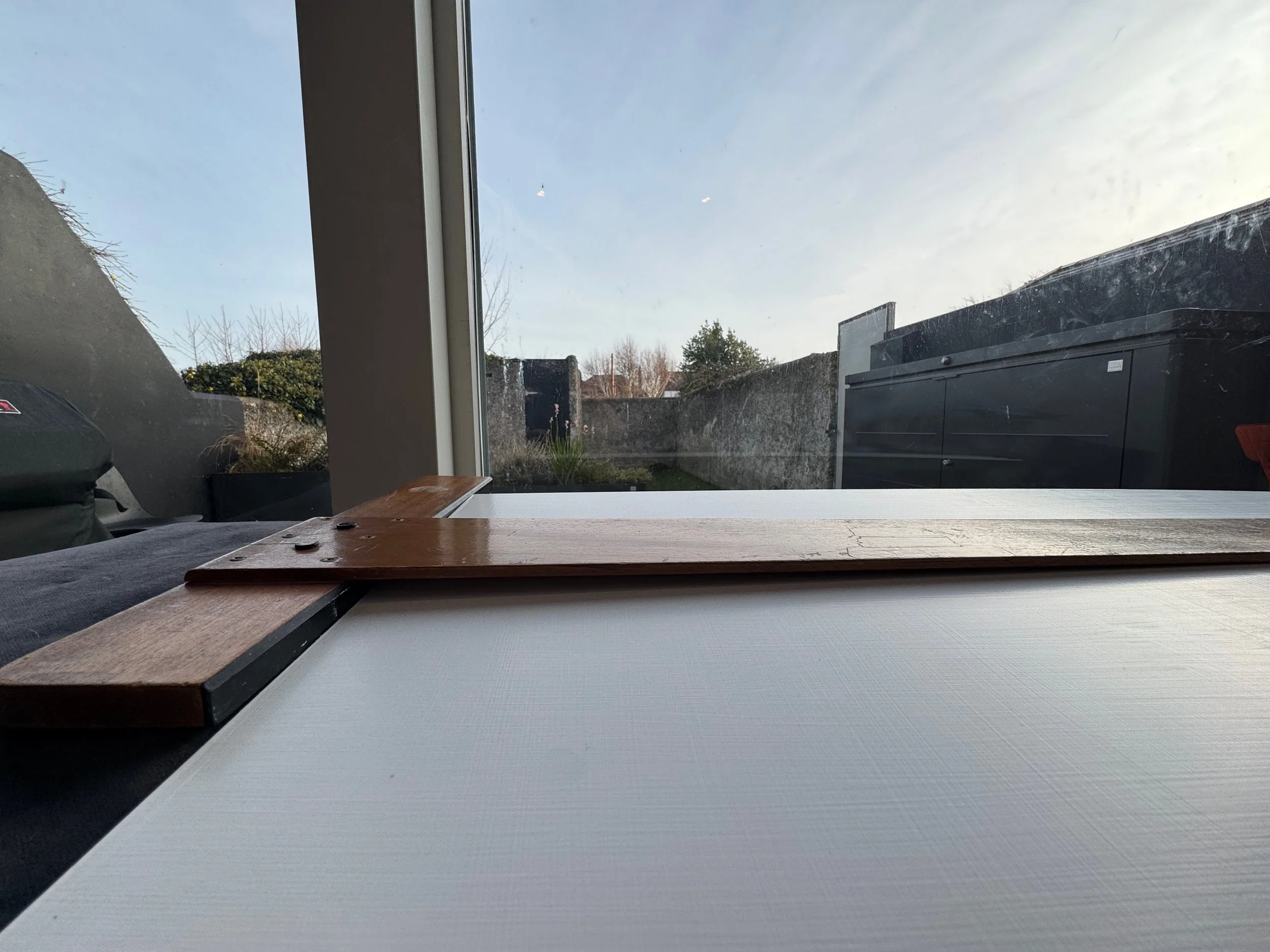
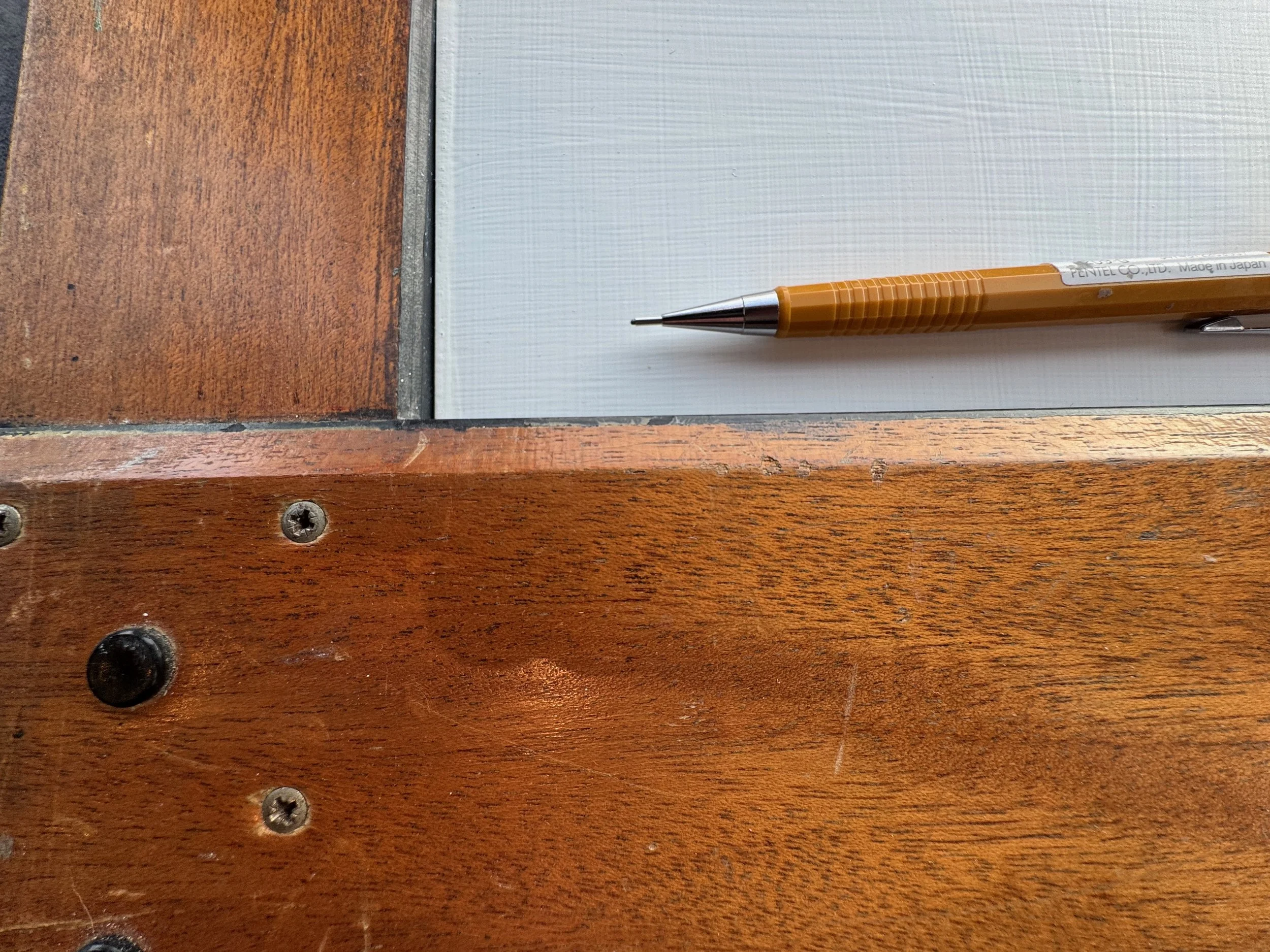
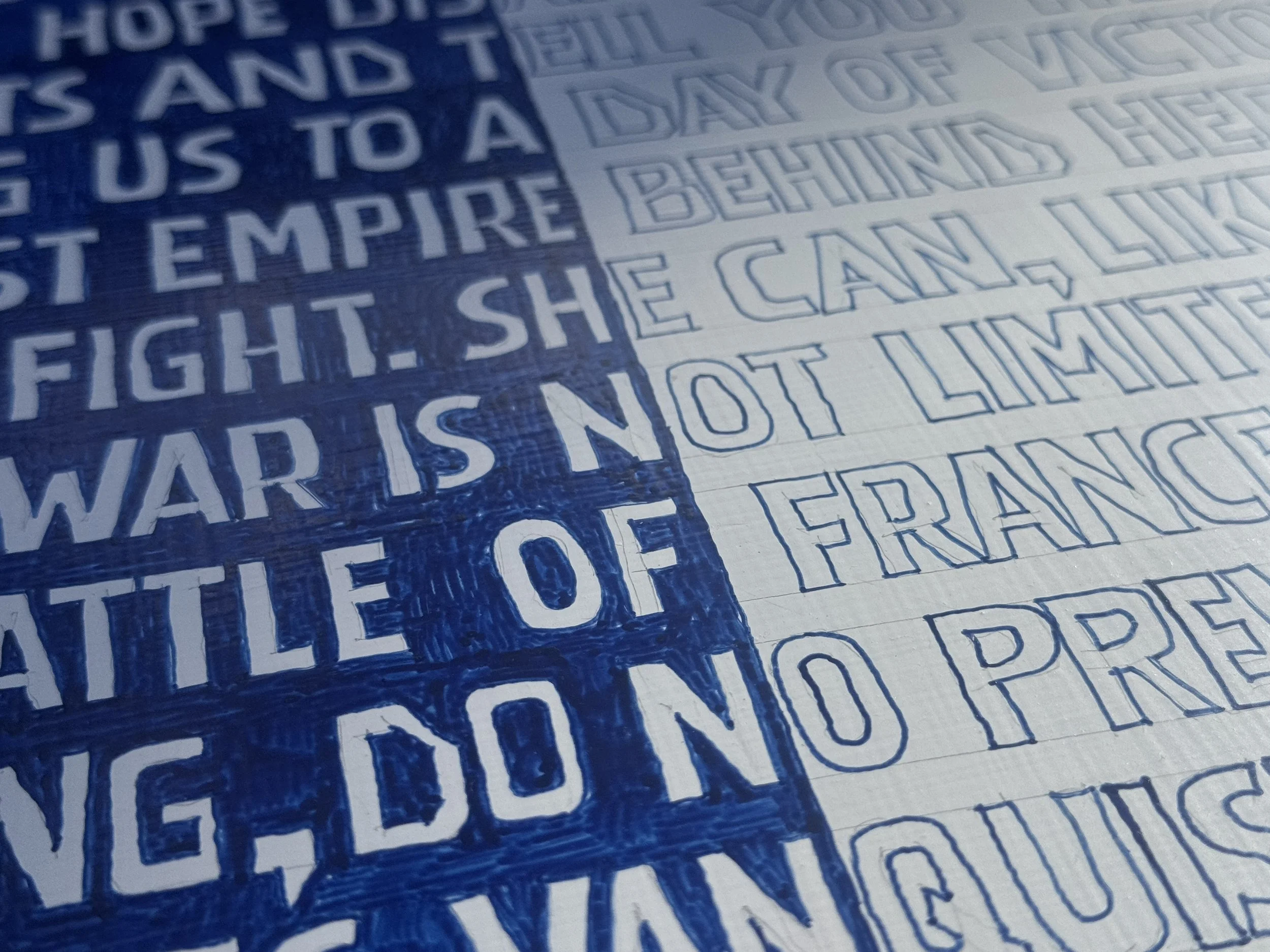
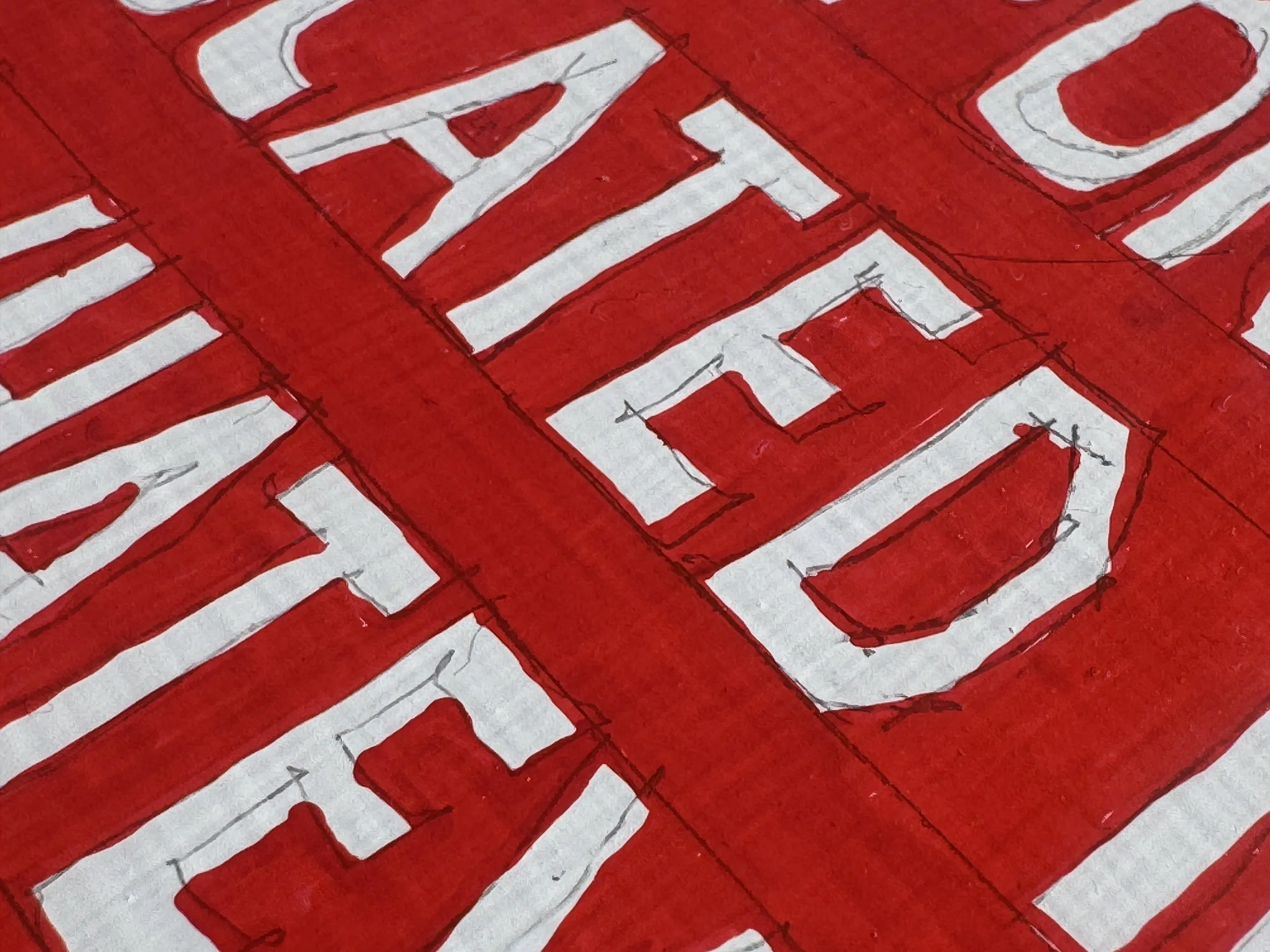
The aluminium panel is prepared, primed and painted white. Using a T-square and pencil, I map de Gaulle’s words across the three vertical bands of the French tricolour. The lettering and surrounding colour are painted by hand in acrylic, gradually building the image in blue, white and red.
Historical Context
On 18 June 1940, Charles de Gaulle broadcast from London on the BBC, calling on the French to continue fighting Nazi Germany as the French government sought an armistice.
He argued that the conflict extended beyond France and that resistance could continue with the support of Britain and the resources of a wider world. Heard by relatively few people at the time, the appeal became a founding moment of Free France and a lasting symbol of resistance.
In this painting, his words form the French tricolour, connecting the national emblem with a refusal to accept defeat.
Charles de Gaulle broadcast his appeal on the BBC from London on 18 June 1940. No recording of that broadcast survives. The surviving recording of his subsequent appeal, delivered on 22 June, is often confused with it.
L’Appel du 18 juin 1940 — De Gaulle, l’éclat et le secret
ORIGINAL PAINTING
For availability and enquiries about the original painting, please contact Gary.